Technical selection, cross-reference and global export supportSend a model or application
Home/Encoder selection guide/Absolute or incremental encoder?

Encoder selection guide

Absolute or incremental encoder?

A practical three-minute guide for choosing the right feedback type before comparing resolution, interface and mechanical size.

DIRECT ANSWER

Choose an absolute encoder when the machine must know its position immediately after power-up. Choose an incremental encoder when the controller mainly needs speed, direction or relative movement and a reliable reference routine is available.

Absolute · Position is available at start-upIncremental · A/B pulses describe movementAbsolute · Single-turn or retained multi-turnIncremental · Ideal for speed and relative travel

SELECTION TABLE

Compare the feedback behaviour

Use this table as an initial engineering checklist. Final model configuration must be confirmed against the controller, mechanical drawing and operating environment.

Absolute encoderIncremental encoder
Outputs a unique digital position valueOutputs pulses while the shaft moves
Position is available immediately after power-upPosition normally comes from homing or an accumulated count
Resolution is specified in bits; single-turn and multi-turn options are availableResolution is specified in PPR or CPR; A/B and optional Z channels are common
Best for retained position, indexing, steering, hoists and axes that cannot home safelyBest for motor speed, direction, counting, cut length and relative travel
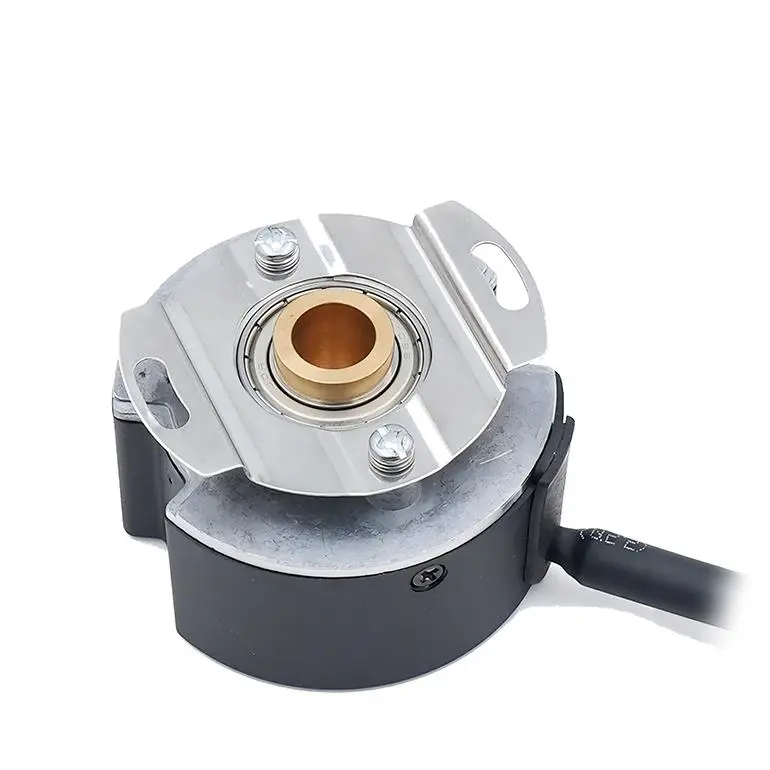
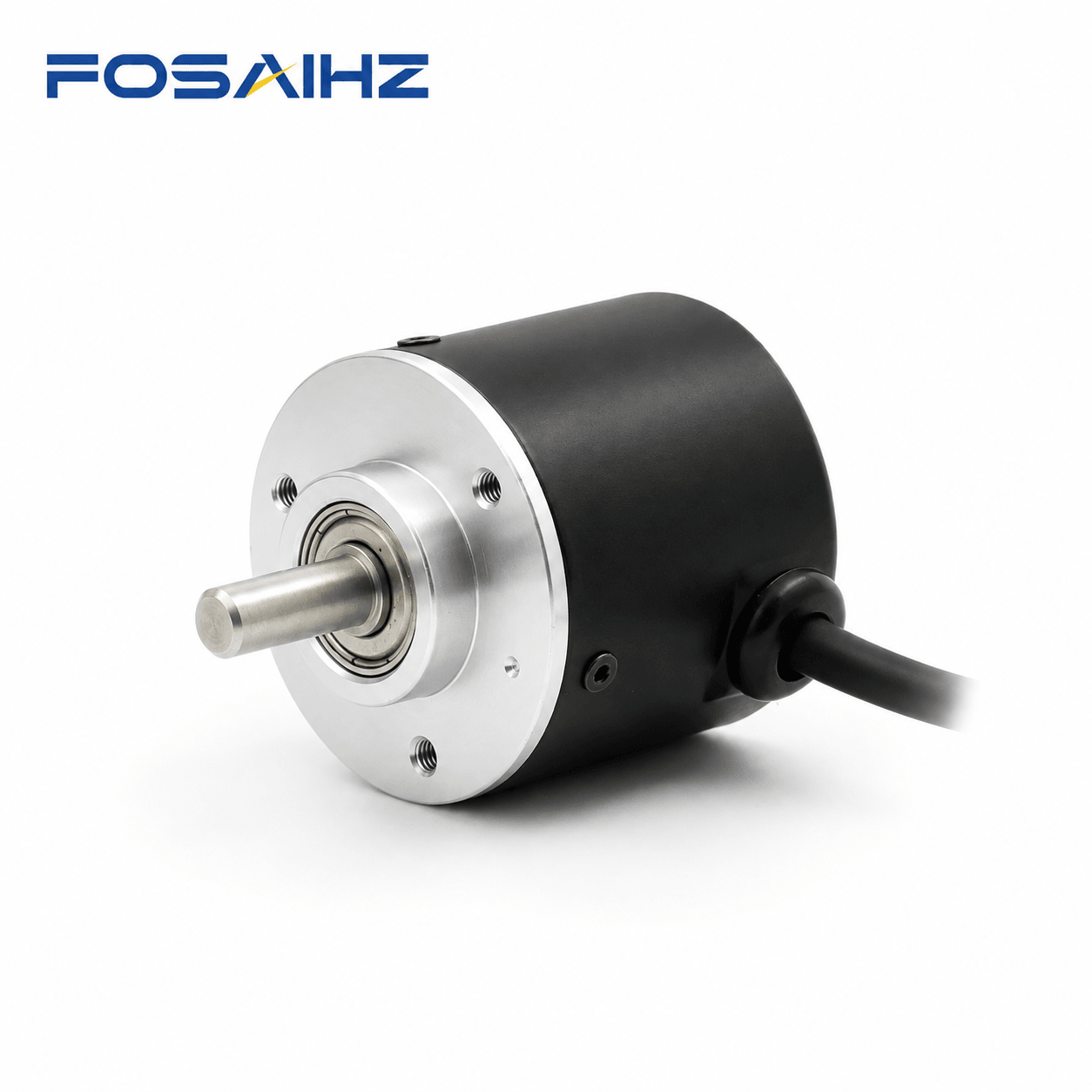
ENGINEERING PROCESS

How to select the right configuration

  1. 01

    Must the machine know its position immediately after power-up? If yes, start with absolute feedback.

  2. 02

    Can the axis move through more than one revolution and must that position be retained? If yes, compare multi-turn absolute options.

  3. 03

    Is the task mainly speed, direction or relative movement with a safe reference routine? If yes, start with incremental feedback.

  4. 04

    Then match resolution, controller input, supply, shaft, mounting and operating environment.

COMMON QUESTIONS

Frequently asked questions

Does an absolute encoder need homing?

An absolute encoder can report its measured position after power-up, so a homing cycle is often unnecessary. The machine may still require calibration or a system reference depending on its mechanics and safety design.

What does the Z channel do on an incremental encoder?

The optional Z or index channel produces a reference event, commonly once per revolution, that a controller can use for registration or homing.

Can an incremental encoder retain position after power loss?

The encoder itself normally reports only movement. A controller may retain the accumulated count, but movement while power is off is not detected unless another mechanism is used.

RELATED GUIDANCE

Continue your selection

Single-turn vs multi-turnHow to choose a rotary encoder

EDITORIAL SCOPE

How this guidance is prepared

FOSAI consolidates available supplier technical material into a buyer-oriented selection guide. Parameters, certifications and compatibility are not generalized across every model; the final suffix, controlled drawing and project conditions must be confirmed before ordering.

MODEL SELECTION SUPPORT

Send the model.
We’ll check the complete fit.

Include the existing model, controller interface, supply, measurement range, shaft or mounting drawing, environment and quantity.

Request technical selection →