What the system must achieve
Maintain reliable position awareness during container handling, slewing and hoisting while the machine is exposed to rain, spray, vibration and salt-laden air.
Application guide
Select IP68 absolute encoders for port cranes, winches, reach stackers and marine machinery exposed to water, vibration and salt-laden air.

01 · THE MACHINE
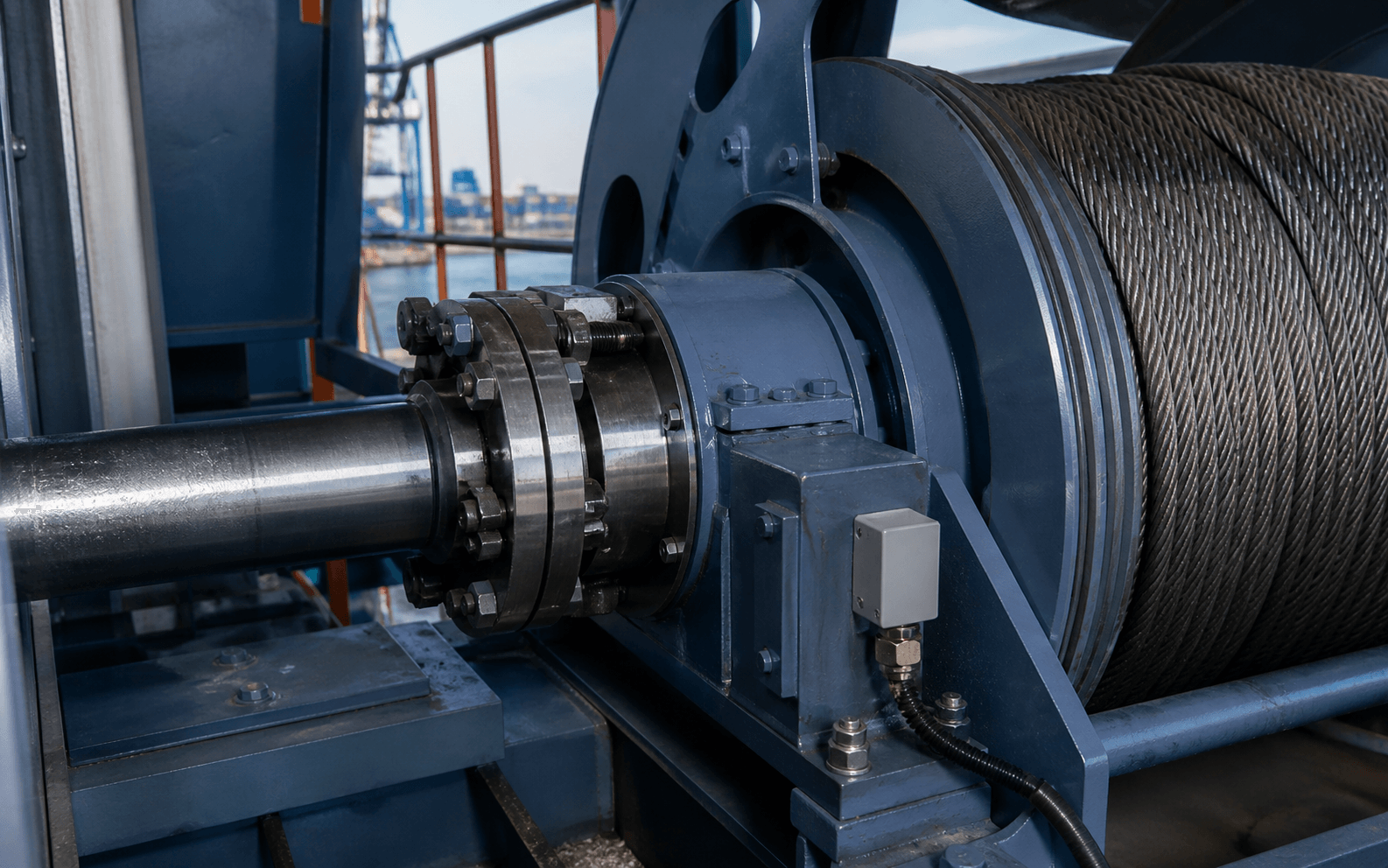
Typical feedback points include crane slewing, steering joints, boom mechanisms and winch drums. The chosen mounting point must represent the controlled movement without adding backlash or excessive shaft load.
02 · WHAT TO MEASURE
A shaft or geared take-off can provide a direct representation of retained drum travel. The final mounting must control backlash, shaft load, corrosion and cable movement.
 VIEW PRODUCT PAGE →
03 · RECOMMENDED PRODUCT
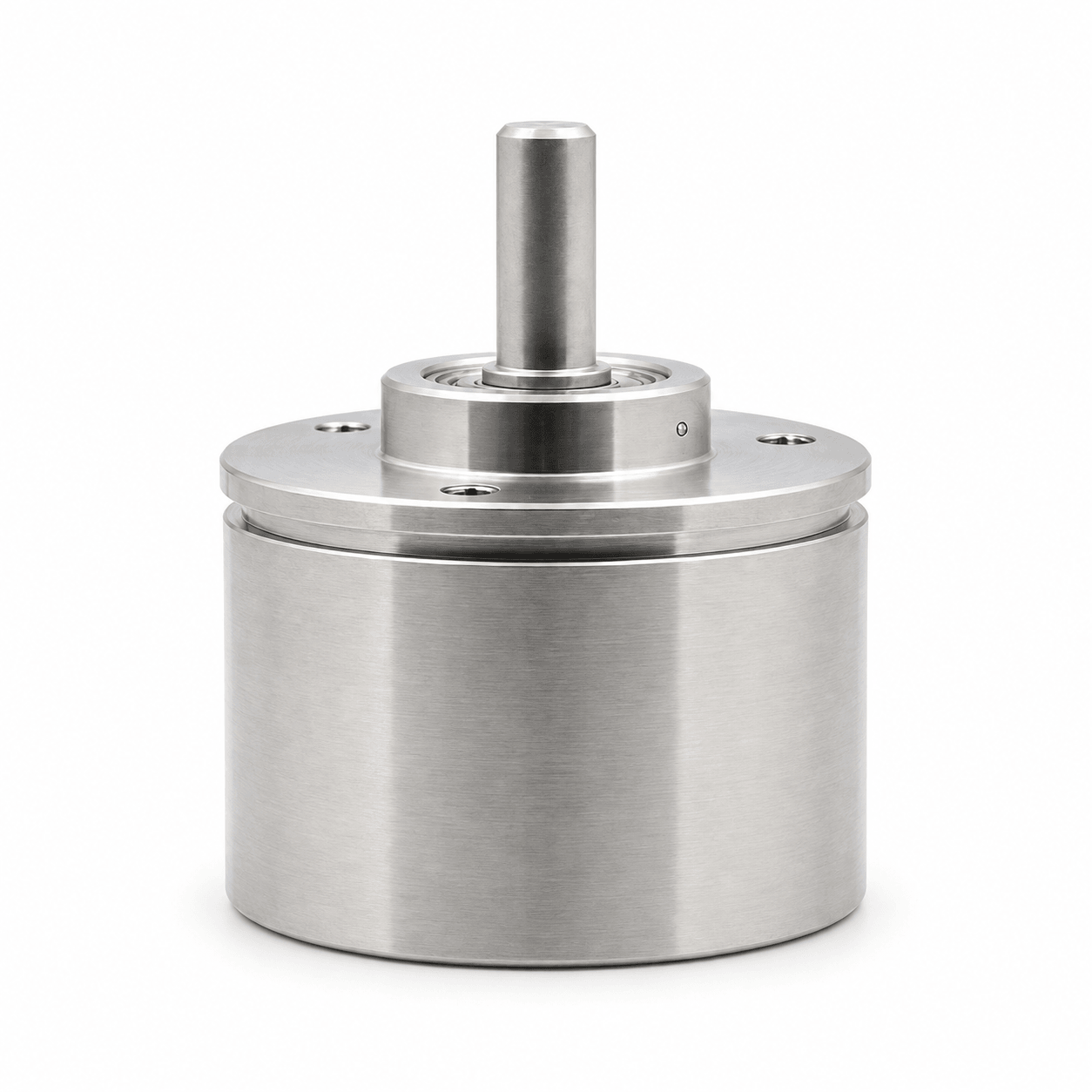
Start with stainless-steel IP68 construction and the controller's native interface. Then confirm salt exposure, connector sealing, coupling, vibration and the model-specific immersion condition.
04 · HOW IT WORKS
The encoder turns crane, steering and drum movement into a position value the controller can act on.
Mounted on the measured shaft, joint or geared mechanism, the absolute encoder follows physical movement and reports angle or retained turns. The controller uses that value for positioning, travel supervision and recovery after a power interruption.
Maintain reliable position awareness during container handling, slewing and hoisting while the machine is exposed to rain, spray, vibration and salt-laden air.
Select single-turn or mechanical multi-turn feedback from the real movement range, then match RS485, CANopen, SSI/BiSS-C or analog output to the controller. Finish the design with stainless construction, protected coupling, sealed cable entry and corrosion review.
05 · EXPECTED RESULT
SELECTION TABLE
Use this table as an initial engineering checklist. Final model configuration must be confirmed against the controller, mechanical drawing and operating environment.
ENGINEERING PROCESS
Identify the shaft, joint or linear movement and its full travel.
Choose RS485, CANopen, SSI/BiSS-C or analog output to match the controller.
Confirm resolution, turn range, coupling, shaft load and cable exit.
Review salt spray, galvanic corrosion, vibration, drainage and connector sealing before approving the drawing.
RELEVANT PRODUCTS
Stainless-steel IP68 absolute feedback for washdown and outdoor machinery.
View parameters and drawings →Stainless-steel IP68 absolute feedback for washdown and outdoor machinery.
View parameters and drawings →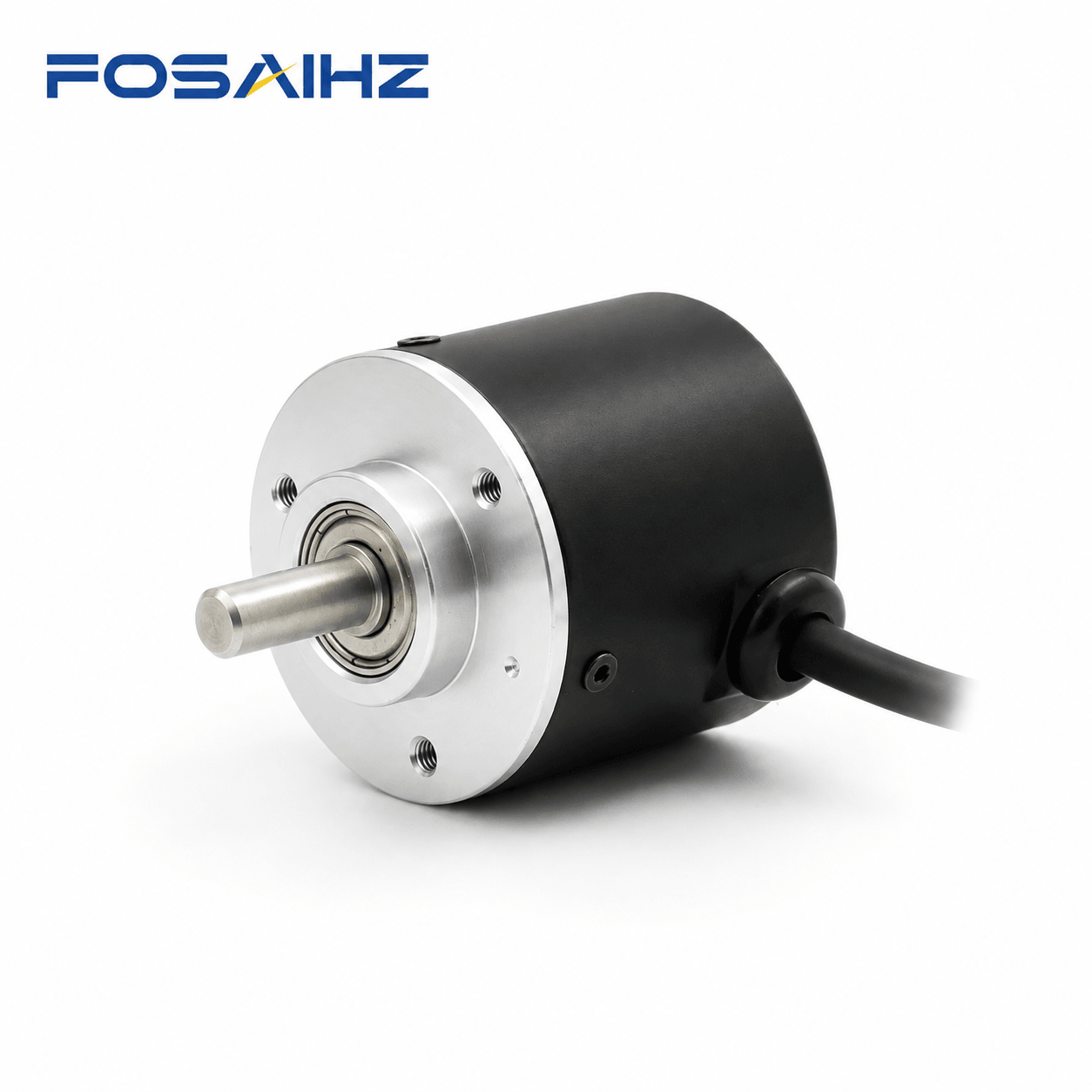
Battery-free IP54 geared turn counting retains absolute position through power loss.
View parameters and drawings →COMMON QUESTIONS
No. IP68 refers to dust and water ingress under a stated test condition. Salt spray, corrosion, cable glands, connectors and mounting materials require a separate review.
A multi-turn absolute encoder is commonly considered when the controller must retain drum position after power loss. The required turns must include the full operating range and setup margin.
Not automatically. Steering may need single-turn angular feedback while hoisting can require retained multi-turn measurement, different mechanics and different safety functions.
RELATED GUIDANCE
EDITORIAL SCOPE
FOSAI consolidates available supplier technical material into a buyer-oriented selection guide. Parameters, certifications and compatibility are not generalized across every model; the final suffix, controlled drawing and project conditions must be confirmed before ordering.
MODEL SELECTION SUPPORT
Include the existing model, controller interface, supply, measurement range, shaft or mounting drawing, environment and quantity.
Request technical selection →