What the system must achieve
Give the control system stable position data for lifting and slewing without forcing an unsafe or time-consuming homing movement after every restart.
Application guide
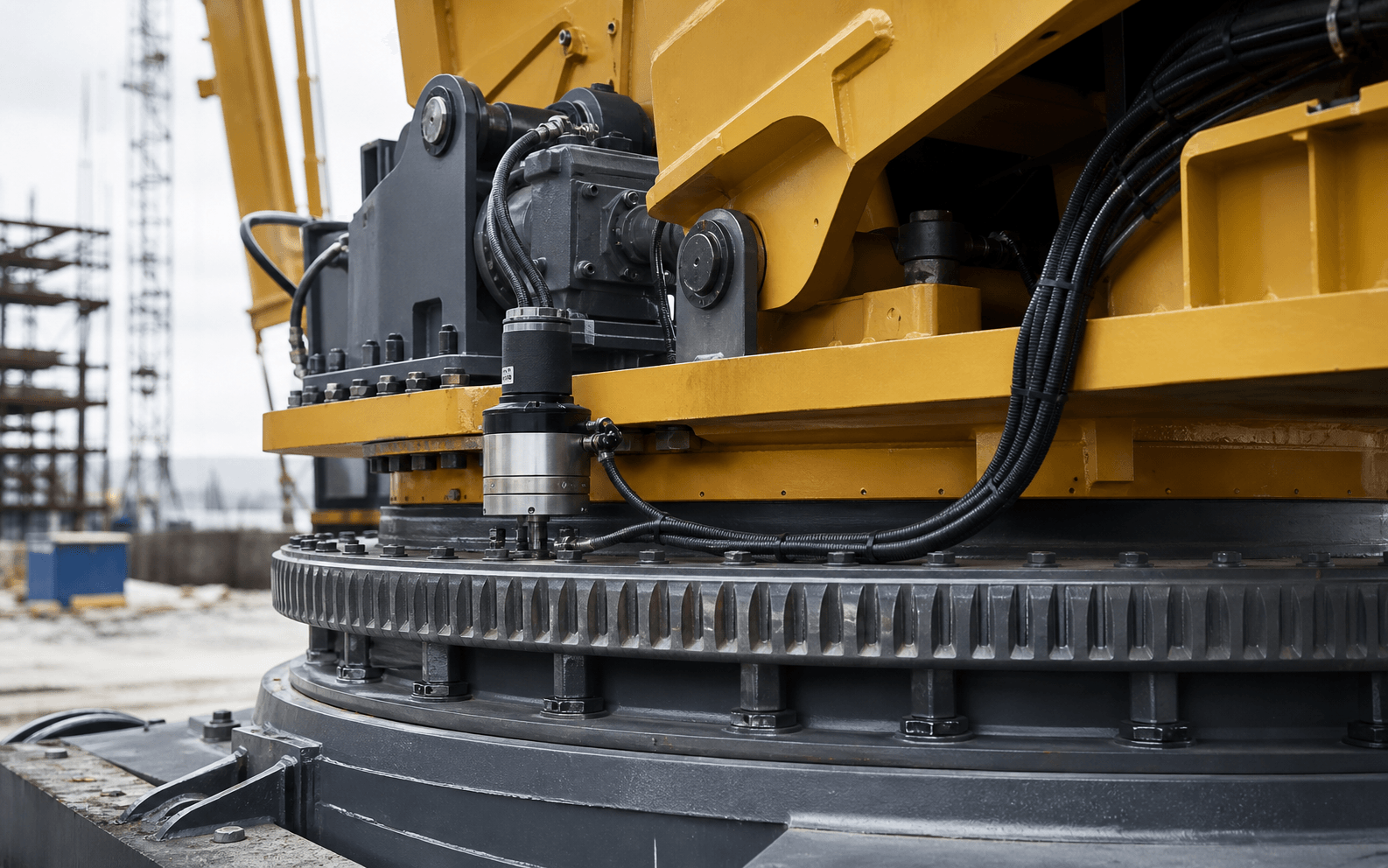
Select absolute encoders for outdoor crane slewing, boom angle, hoist drums and travel mechanisms in rain, dust and vibration.

01 · THE MACHINE
Slewing and boom joints usually need angular feedback. Hoist drums and geared mechanisms may need retained multi-turn position. Telescopic movement can require linear feedback instead.
02 · WHAT TO MEASURE
The encoder connection should follow the controlled axis without becoming the mechanical fuse. Guarding, coupling alignment and cable bend radius are reviewed before the drawing is approved.
 VIEW PRODUCT PAGE →
03 · RECOMMENDED PRODUCT
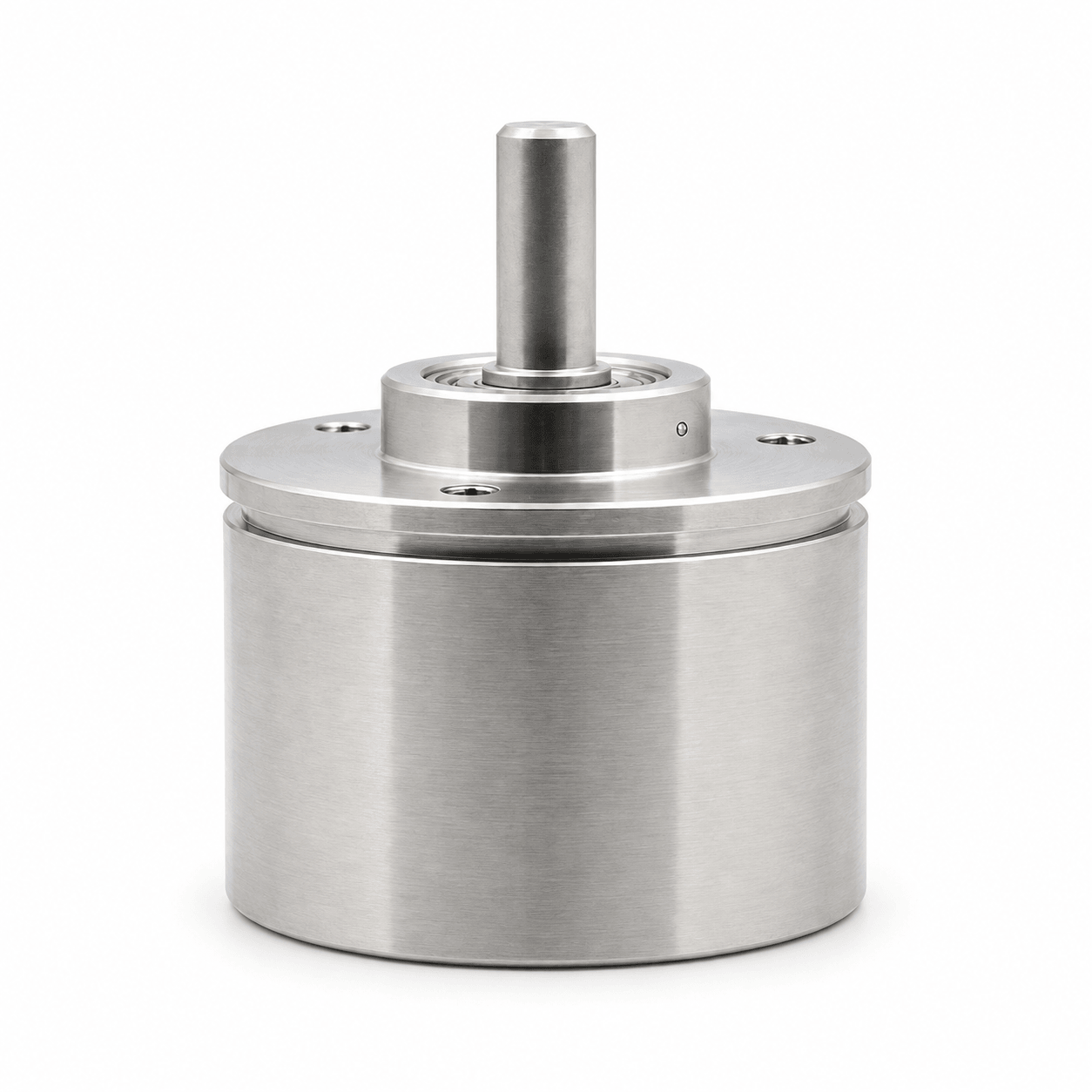
Single-turn and multi-turn are functional choices, not protection levels. After the measuring range is correct, specify interface, resolution, outdoor protection, cable exit and mechanical guarding.
04 · HOW IT WORKS
The feedback device tells the crane where each controlled movement is—not simply whether it is moving.
A rotary encoder can measure slewing or boom angle, while retained multi-turn feedback follows drums and geared axes. A draw-wire sensor can be considered when the required variable is linear extension rather than rotation.
Give the control system stable position data for lifting and slewing without forcing an unsafe or time-consuming homing movement after every restart.
Separate every crane motion into angular, multi-turn or linear measurement. Configure the range and interface first, then confirm coupling, backlash, cable routing, outdoor sealing and the independent machine safety architecture.
05 · EXPECTED RESULT
SELECTION TABLE
Use this table as an initial engineering checklist. Final model configuration must be confirmed against the controller, mechanical drawing and operating environment.
ENGINEERING PROCESS
Define the movement, gear ratio, full turns or angular range and allowable error.
Decide what position must be available immediately after power-up.
Match interface, supply, update behavior and machine controller.
Approve mechanical guarding, coupling, cable routing, environmental protection and the controlled drawing.
RELEVANT PRODUCTS
Stainless-steel IP68 absolute feedback for washdown and outdoor machinery.
View parameters and drawings →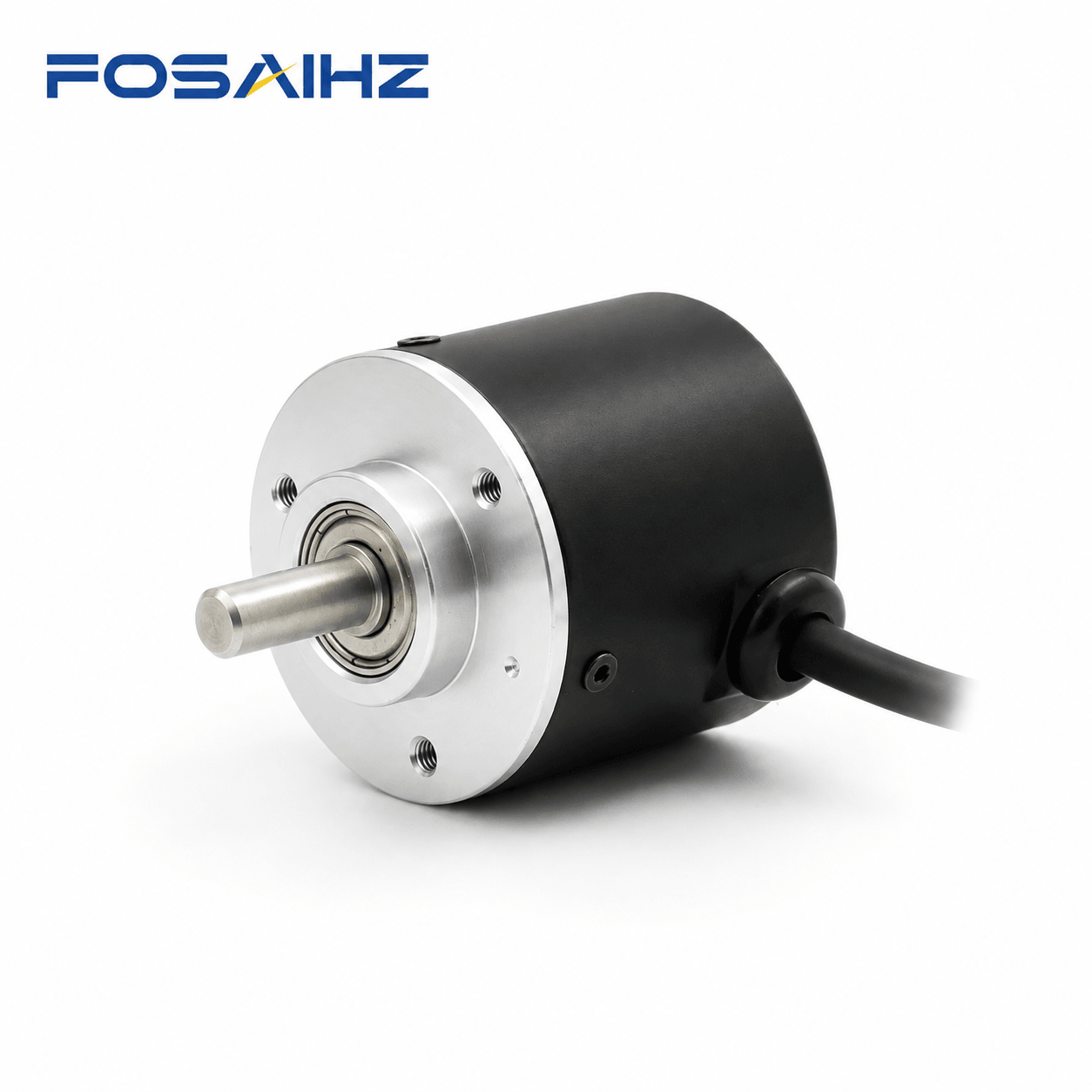
Battery-free IP54 geared turn counting retains absolute position through power loss.
View parameters and drawings →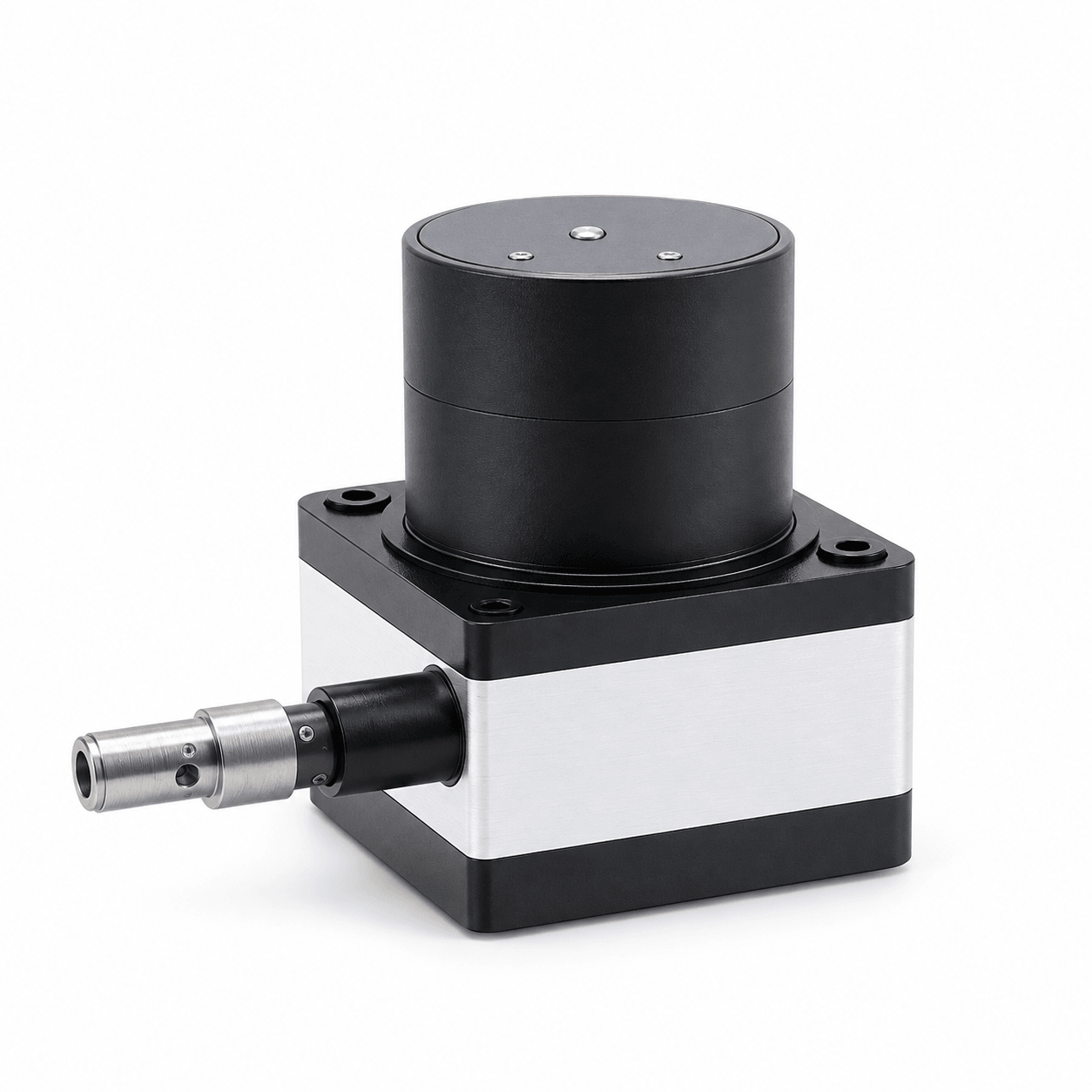
Protected linear-position measurement for outdoor, washdown and water-infrastructure applications.
View parameters and drawings →COMMON QUESTIONS
Absolute feedback is usually preferred when the machine must know position immediately after power-up or cannot safely perform a homing movement.
It is a useful starting point, but condensation, UV, cable sealing, corrosion, vibration, lightning and EMC exposure still need project review.
An encoder can support position monitoring, but safety limits and functional-safety architecture must be designed and validated separately.
RELATED GUIDANCE
EDITORIAL SCOPE
FOSAI consolidates available supplier technical material into a buyer-oriented selection guide. Parameters, certifications and compatibility are not generalized across every model; the final suffix, controlled drawing and project conditions must be confirmed before ordering.
MODEL SELECTION SUPPORT
Include the existing model, controller interface, supply, measurement range, shaft or mounting drawing, environment and quantity.
Request technical selection →