What the system must achieve
Integrate reliable position feedback into a vibrating outdoor vehicle while respecting supply variation, limited installation space and the machine's control architecture.
Application guide
Select rugged absolute encoders for steering, booms, outriggers and rotating equipment on municipal and special-purpose vehicles.
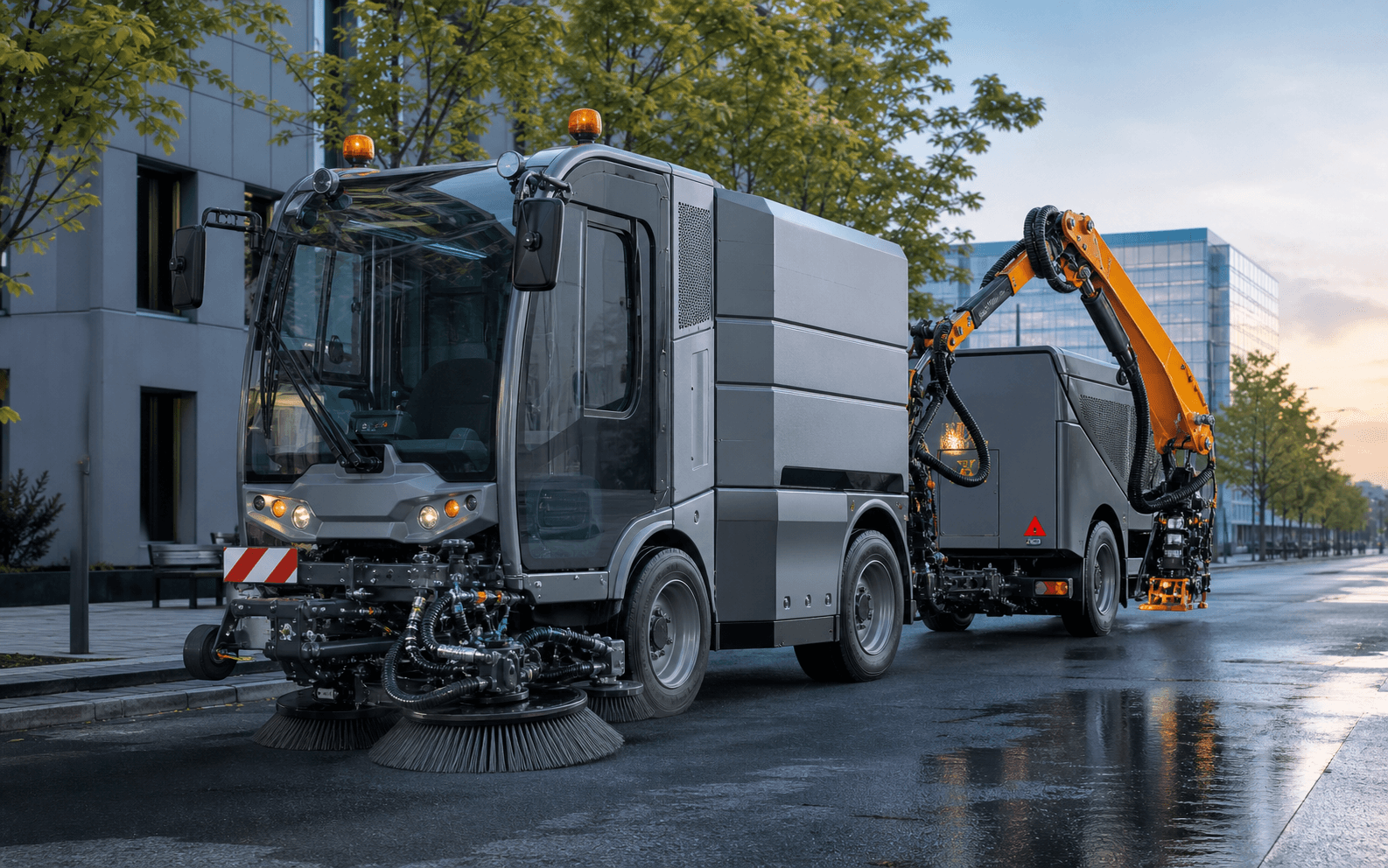
01 · THE MACHINE
Steering, lifting booms, outriggers and rotary attachments need different ranges and update behavior. Position after power-up is often valuable where a homing movement is unsafe or impractical.
02 · WHAT TO MEASURE
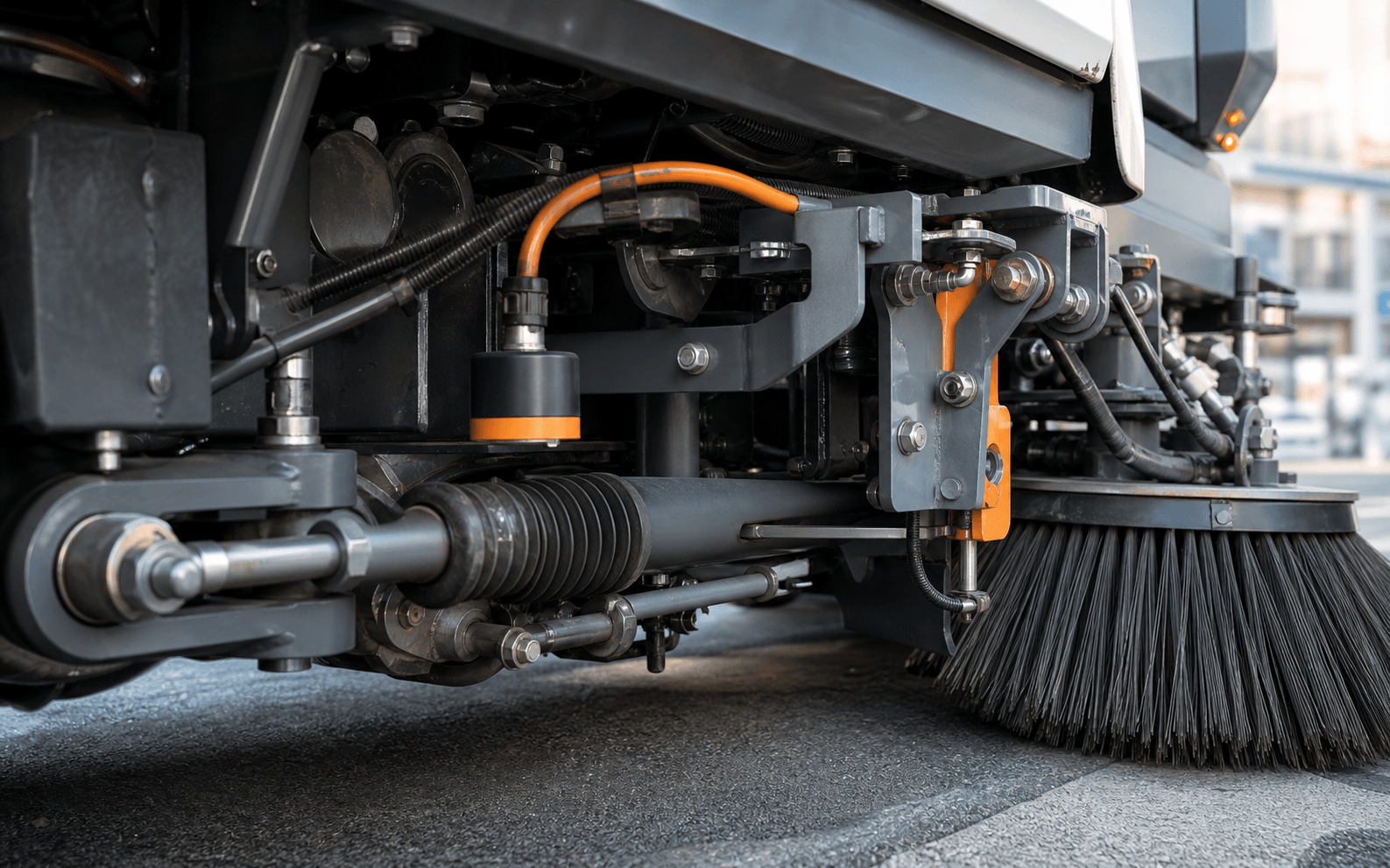
Compact vehicle installations need a sensing point that stays clear of debris, articulation and service access. Supply variation and the controller input are checked alongside the mechanics.
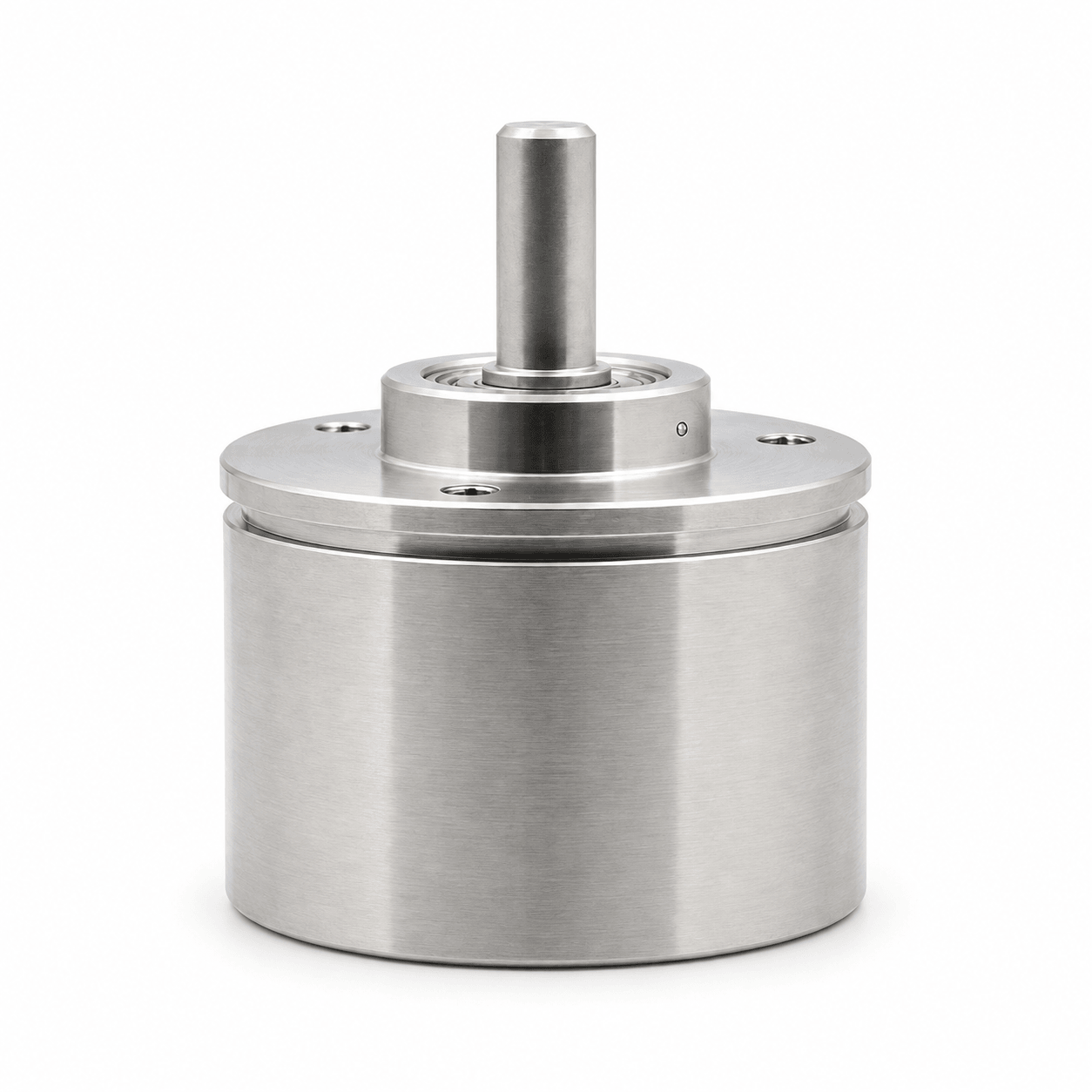 VIEW PRODUCT PAGE →
03 · RECOMMENDED PRODUCT
Confirm CANopen, RS485, analog or pulse input, then select resolution and travel. Review vehicle supply variation, vibration, connector retention, water exposure and the separate safety architecture.
04 · HOW IT WORKS
The encoder gives the vehicle controller an exact reference for steering, booms, outriggers and rotary attachments.
The sensor follows the controlled joint and reports its angle or retained travel through the supported vehicle interface. Absolute feedback is especially useful where a vehicle cannot safely perform a full reference movement after starting.
Integrate reliable position feedback into a vibrating outdoor vehicle while respecting supply variation, limited installation space and the machine's control architecture.
Confirm the vehicle input and supply first, then select range, resolution, shaft and cable exit. Protect the mounting from impact and strain, retain the connector and keep functional-safety requirements separate from the standard sensor specification.
05 · EXPECTED RESULT
SELECTION TABLE
Use this table as an initial engineering checklist. Final model configuration must be confirmed against the controller, mechanical drawing and operating environment.
ENGINEERING PROCESS
Identify each movement and whether position must survive power loss.
Confirm CANopen, RS485, analog or pulse input and the available supply.
Select resolution, turn range, housing, shaft and cable exit.
Review vibration, temperature, water, chemicals, connector retention and safety architecture.
RELEVANT PRODUCTS
Stainless-steel IP68 absolute feedback for washdown and outdoor machinery.
View parameters and drawings →Stainless-steel IP68 absolute feedback for washdown and outdoor machinery.
View parameters and drawings →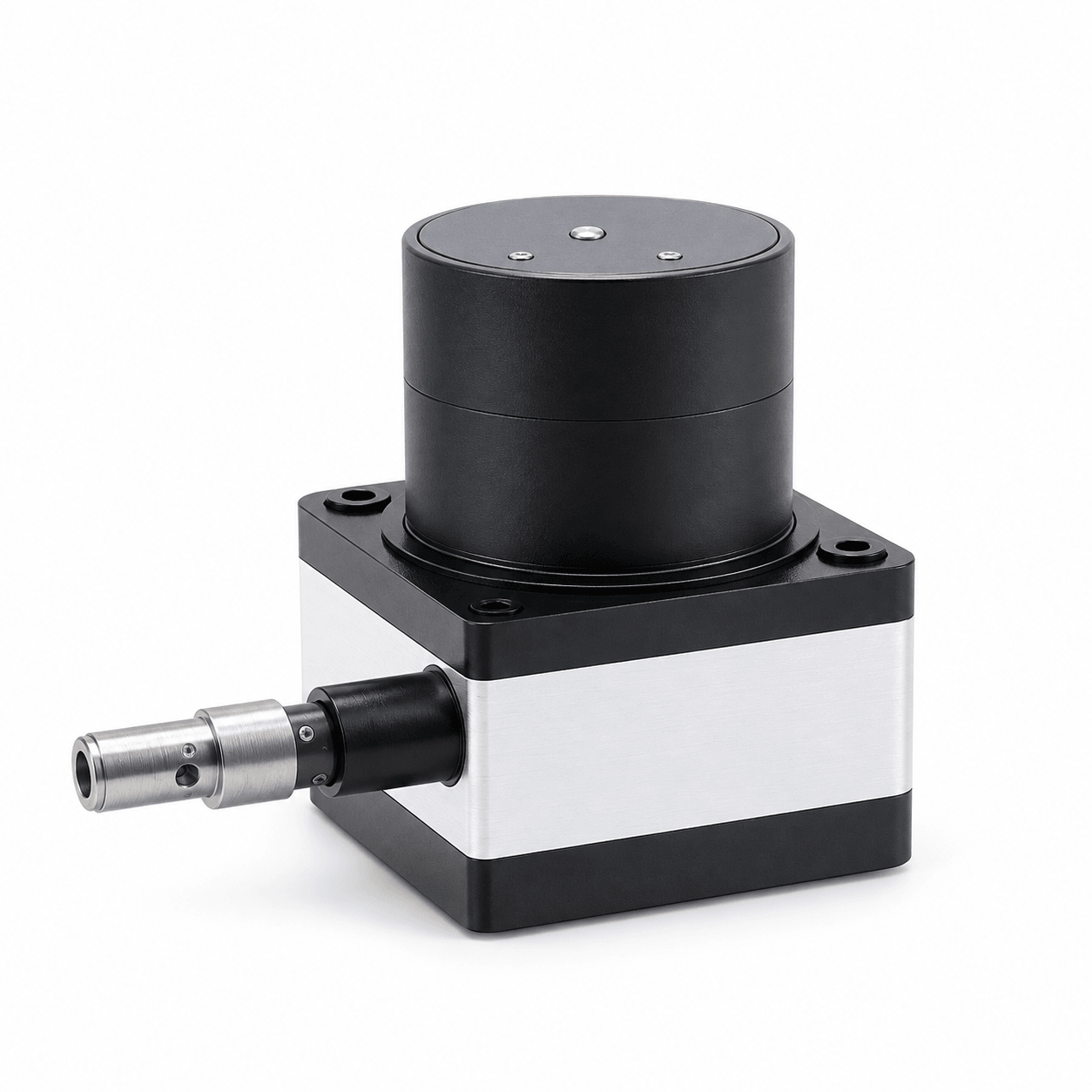
Protected linear-position measurement for outdoor, washdown and water-infrastructure applications.
View parameters and drawings →COMMON QUESTIONS
Use the interface supported by the vehicle controller and system architecture. CANopen, raw CAN, RS485 Modbus and analog signals are not drop-in equivalents.
No. Protect it from direct impact, cable strain, excessive shaft load and uncontrolled pressure washing, and follow the approved mounting orientation.
Only within a validated safety architecture using appropriately specified components, diagnostics and standards. A standard product specification alone does not establish functional safety.
RELATED GUIDANCE
EDITORIAL SCOPE
FOSAI consolidates available supplier technical material into a buyer-oriented selection guide. Parameters, certifications and compatibility are not generalized across every model; the final suffix, controlled drawing and project conditions must be confirmed before ordering.
MODEL SELECTION SUPPORT
Include the existing model, controller interface, supply, measurement range, shaft or mounting drawing, environment and quantity.
Request technical selection →